Verschillende Duitse, Amerikaanse en Nederlandse vredesactivisten spendeerden tussen de 30 en de 229 dagen in Duitse gevangenissen om te getuigen voor een kernwapenvrije wereld. Hieronder delen we in het Engels en in het Nederlands iets meer van mede Catholic Workers Susan Crane en Brian Terrell en vanuit het Noelhuis, Susan van der Hijden en Frits ter Kuile.
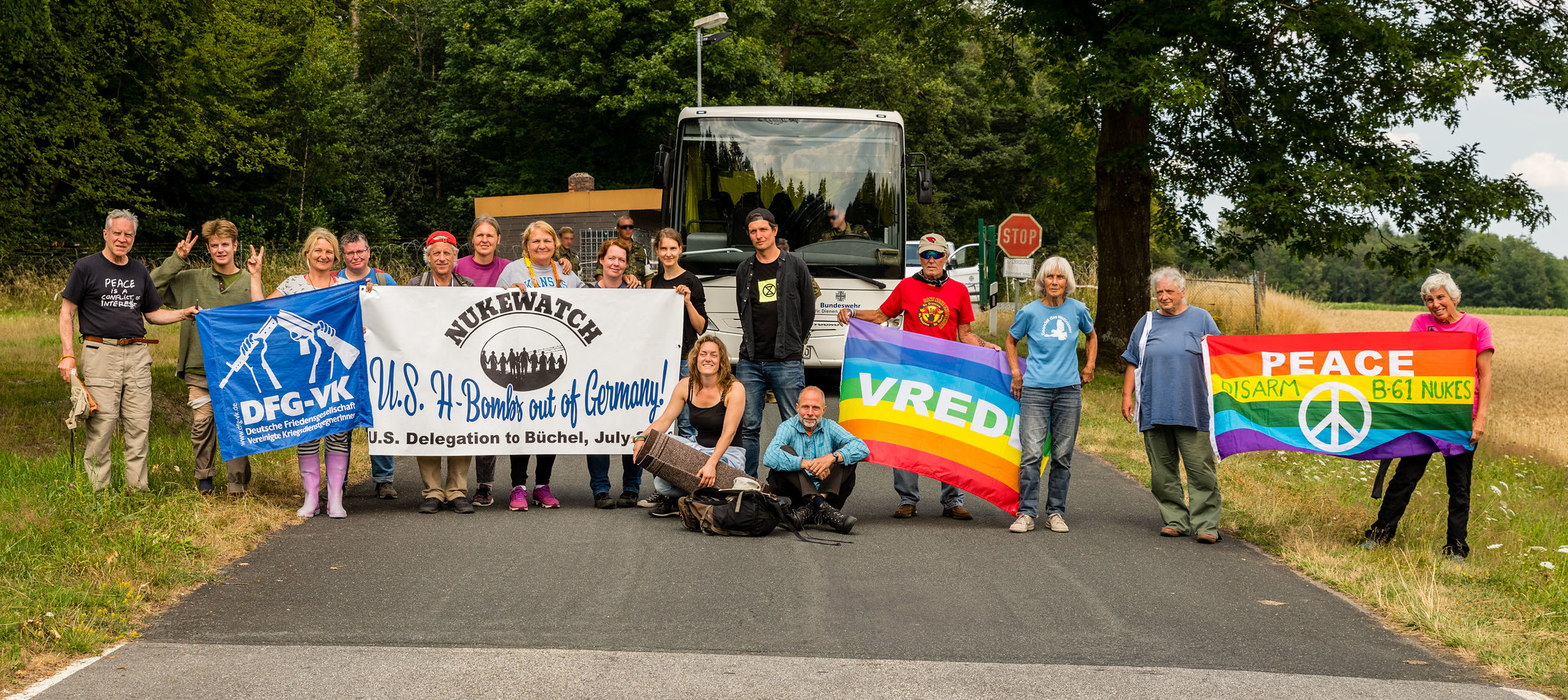
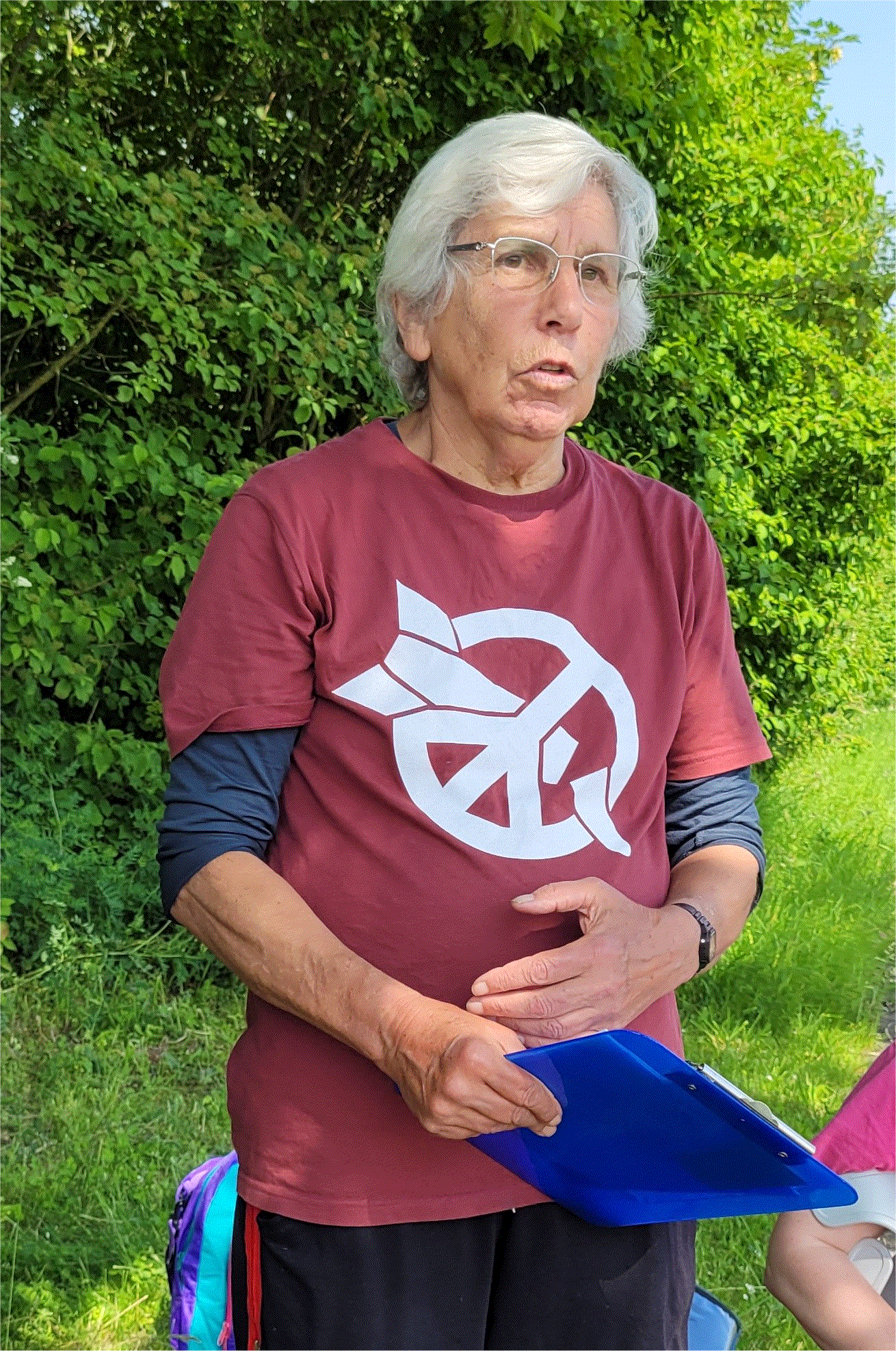
Susan is a school teacher, mom, grandma, war tax resister, nonviolent anti-nuclear and anti-war activist, and Catholic Worker from Redwood City, California. For the past 48 years Susan has tried to withdraw her consent from the economic and political system that is a death sentence to life on earth. She has done this through war tax resistance and nonviolent direct action. She has been in prison over 6 years for peace actions, including several Plowshares actions, which addressed the dangers, illegality and immorality of nuclear weapons. In 2024/25 she spent 220 days for several Go-in-actions at Büchel Airbase.
Susan Crane states:
“As a US citizen, I feel responsible for the nuclear weapons that are created with my tax dollars. I have said, out of conviction and conscience, that we must disarm nuclear weapons here in the US, and that is why it makes sense to get involved with the international community of peacemakers against the US nuclear weapons stationed in Europe.” The United States spends more than $84,094 on nuclear weapons every minute. Meanwhile, millions of people in the United States face contaminated water and unsafe food, are homeless and suffer from inadequate medical care. These problems, also faced by the poor around the world, could be solved with the resources and money the United States spends on warfare and nuclear weapons. “My faith teaches me that every child is sacred and that there is no moral justification for killing other people in war, destroying their land, or poisoning their water. Nuclear war does all of this.”
Susan Crane
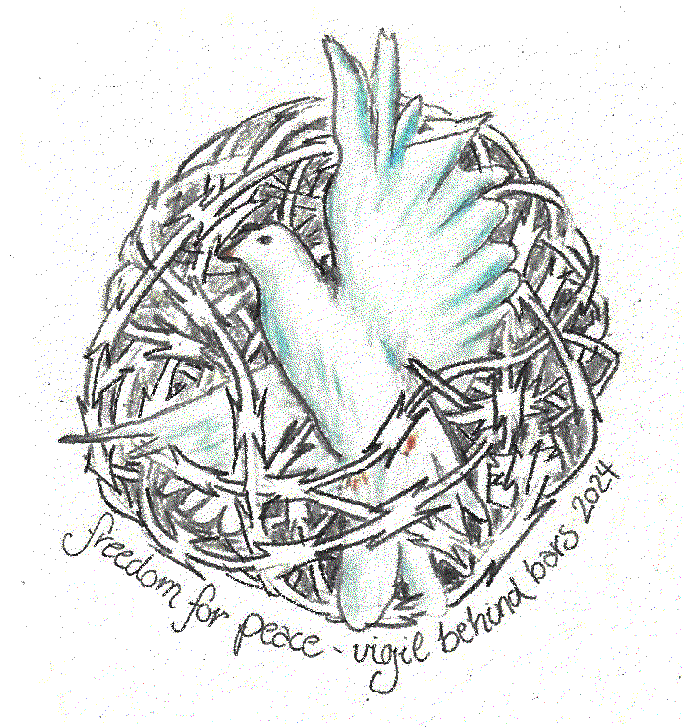
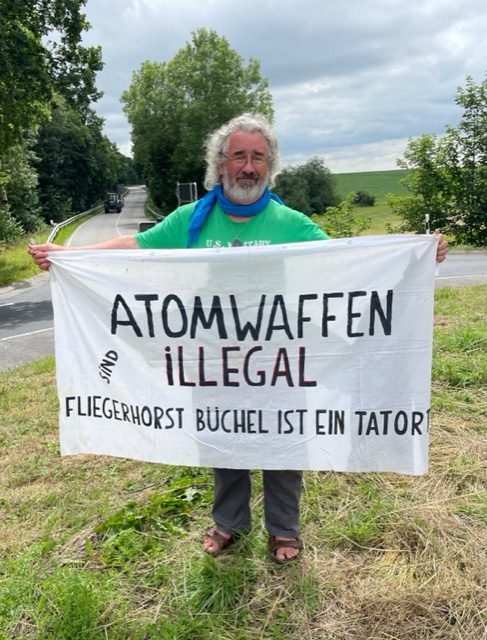
Brian Terrell, Catholic Worker from Iowa, USA, spent 15 days “vigil behind bars” in Wittlich Prison Germany in 2025.
Brian Terrell states:
“It’s not me who is a criminal, it’s my government that is stationing nuclear weapons of mass destruction in Büchel in violation of international law and thus making it the target of a nuclear strike. The German government is aiding and abetting this by having Bundeswehr soldiers practice using these weapons on a daily basis,”
Brian Terrell
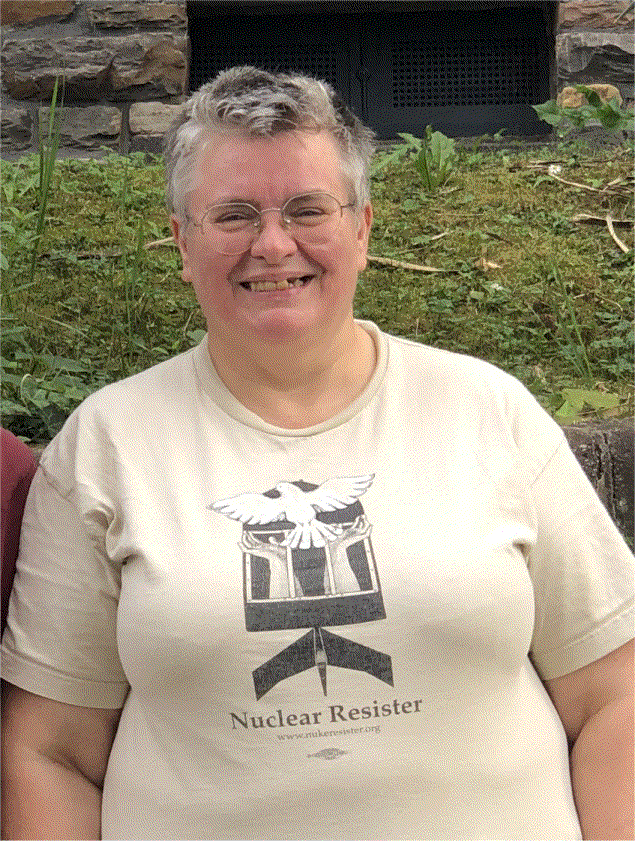
Susan, born 1969, has been living in the Amsterdam Catholic Worker since 1998, with a long break after her participation in the Jubilee Ploughshares 2000 action in England. Besides (helping) organise actions against nuclear weapons, such as the Pink Shovel actions and the Volkel peace camp in August 2023. Although already demonstrating at Büchel in the early 2000’s, the first actions Susan helped organise and involved going on the nuclear air base were in 2017. In 2024 she spent 115 days in prison as a result from actions in 2018 and 2019.
Court statement in Cochem dicstrict court 2020:
Honourable Judge, ladies and gentlemen,
I would like to start with thanking the people that made it possible for me to stand here today. I was part of a group of seventeen people, who together cut and entered the fences of Nuclear airforce base Büchel. […] I do not have much faith in the law. The law should protect its citizens but it keeps protecting the weapons, the violence against the poor and the fences surounding nuclear bases such as the ones at Büchel airforce base. […] I can name laws and treaties, but in the end the fences are more important than human lives. I can talk about the damage done to people and the enviroment from mining Uranium, or the families I talked to in Kansas City in the USA, who lost loved ones to cancer, who worked making Nuclear weapons. […] You will tell me you sympathize but that this is not the right way to go about it. That the fence is sacred and shall not be touched. There are other ways to get rid of the nukes. But what are they? I wish I could do other things, but do not know what will make those in power listen. It seems time to make the changes we want ourselves. Cutting the fence is the first step. […] I dont have much faith in the law but I have hope. And I do think its a good thing to have laws. So I came here, despite all the Corona madness, to have you judge my actions. If you really think the fences are more important than human lives you should punish me and I will go to prison without resistance. But I have hope that these small actions of ours will plant seeds for the future, that they will draw attention to these weapons of mass destruction and keep it on the agendas of politicians.
Susan van der Hijden
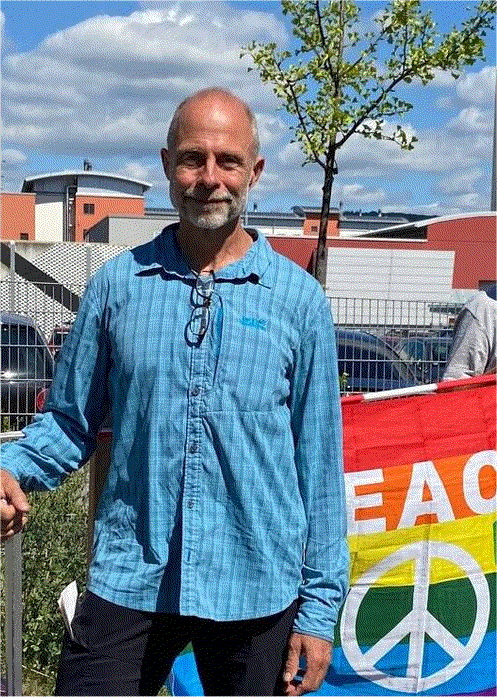
On July 4th 2022 Frits ter Kuile entered Wittlich Prison in Germany to serve a 30 day sentence for his resistance to nuclear weapons. In 2018 Frits and seventeen fellow resisters entered Büchel Air Base, home to 20 U.S. nuclear bombs. Frits, Susan Crane and Stefanie Augustin prayed an Our Father on top of a QRA bunker designed for a fighter-bomber airplane parked above a vault containing the nuclear bomb. By entering Büchel Air Base and Wittlich prison Frits wants to advocate for the Peace of Christ. Frits says:
“Nuclear weapons are illegal under many international laws and are a threat to creation. Jesus teaches us: love your enemies. Pray for those who downpress & persecute you. Overcome evil with good.”
During our vigils in front of the prison gate blessing and commissioning our sisters and brothers into the ‘belly of the beast’, we read these words of Daniel Berrigan about the wasting disease of normalcy:
“I think of the good, decent, peace-loving people I have known by the thousands, and I wonder. How many of them are so afflicted with the wasting disease of normalcy that, even as they declare for the peace, their hands reach out with an instinctive spasm… in the direction of their comforts, their home, their security, their income, their future, their plans—that five-year plan of studies, that ten-year plan of professional status, that twenty-year plan of family growth and unity, that fifty-year plan of decent life and honorable natural demise. “Of course, let us have the peace,” we cry, “but at the same time let us have normalcy, let us lose nothing, let our lives stand intact, let us know neither prison nor ill repute nor disruption of ties.” And because we must encompass this and protect that, and because at all costs—at all costs—our hopes must march on schedule, and because it is unheard of that in the name of peace a sword should fall, disjoining that fine and cunning web that our lives have woven, because it is unheard of that good men should suffer injustice or families be sundered or good repute be lost—because of this we cry peace and cry peace, and there is no peace. There is no peace because there are no peacemakers. There are no makers of peace because the making of peace is at least as costly as the making of war—at least as exigent, at least as disruptive, at least as liable to bring disgrace and prison and death in its wake.“
Frits ter Kuile
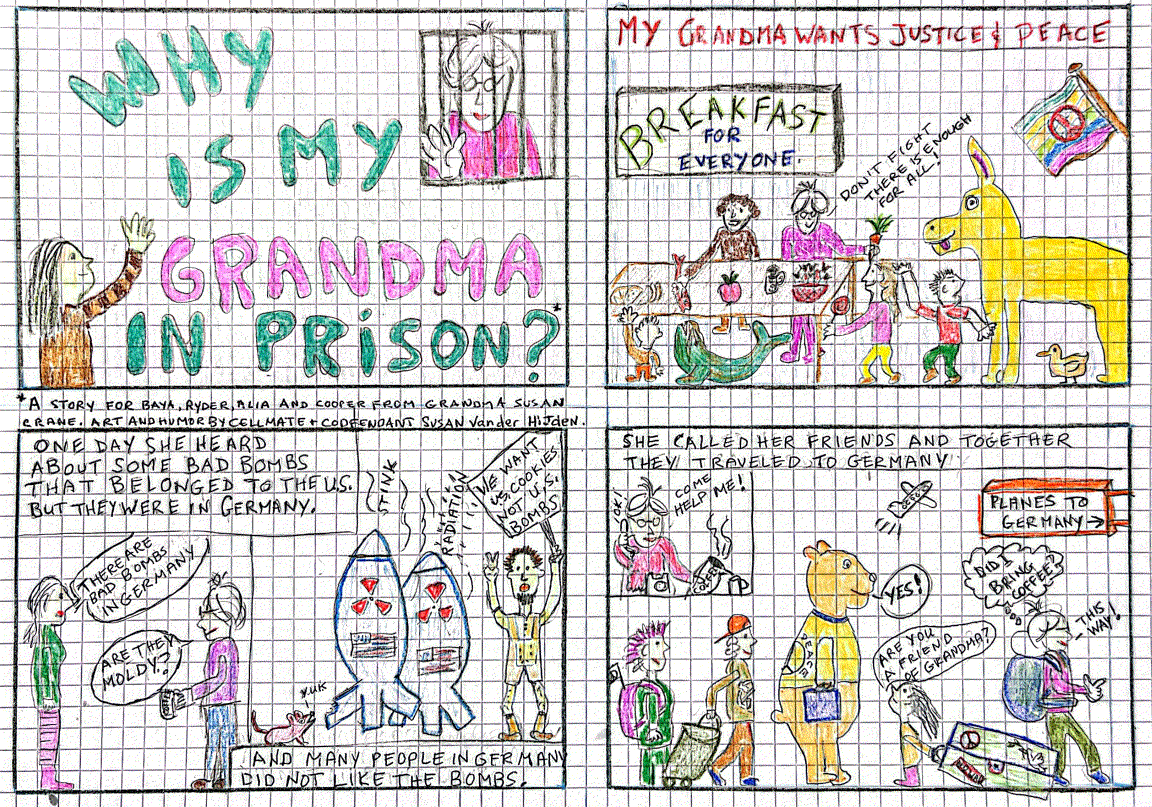
Why is My Grandma in Prison?
Susan and Susan made a comic strip when being at JVA Rohrbach for the grandchildren of Susan C. (Click on the picture to read the whole comic strip.)
Background information
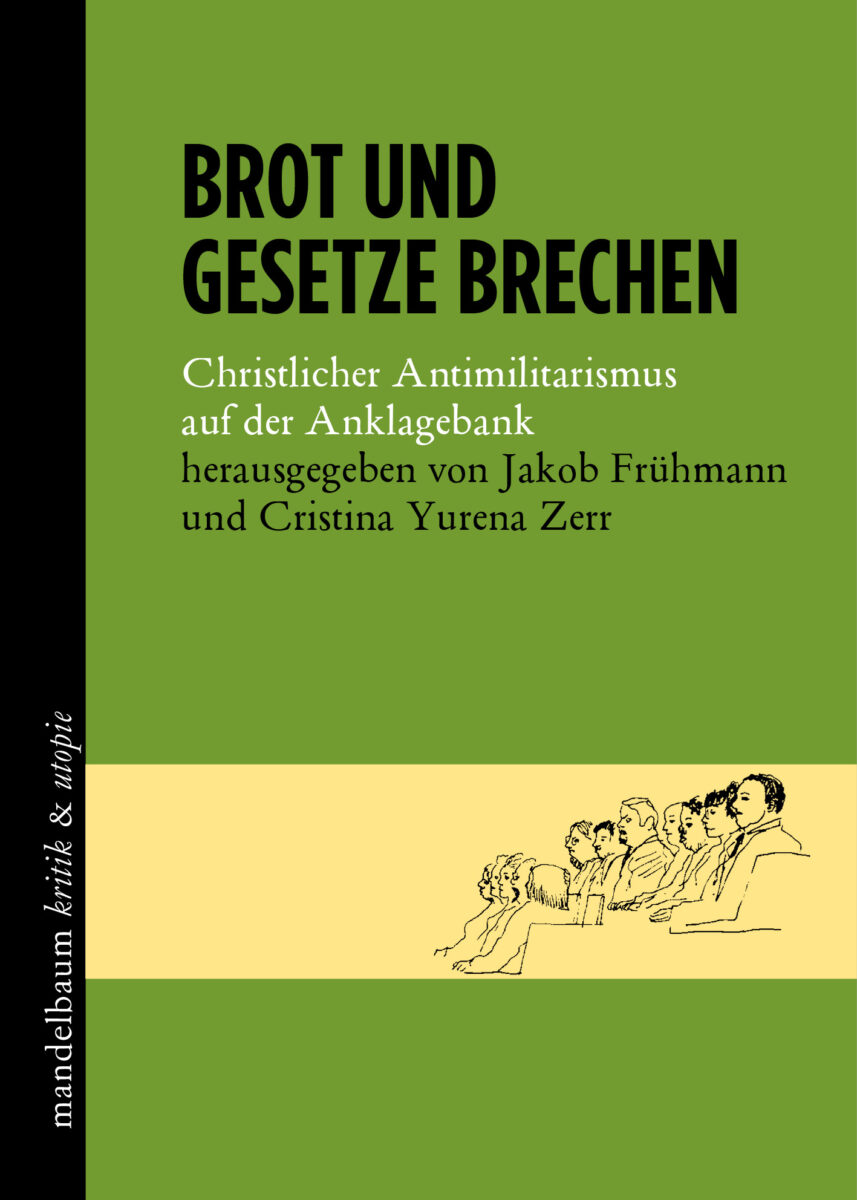
In the German book Brot und Gessetze brechen – Christlicher Antimilitarismus auf der Anklagebank, by Jakob Frühmann and Cristina Yurena Zerr, you find more about these and connected actions.
Ordensschwestern, Großmütter, Priester oder Postangestellte, die in Militärbasen einbrechen, um gegen dort stationierte Atombomben zu protestieren und so Veränderungen globaler Gewaltverhältnisse zu fordern. Die Pflugscharbewegung wurde zum Symbol radikal christlicher und gewaltfreier Praxis. So etwa im deutschen Büchel, wo US-Atomwaffen gelagert werden, oder in Kings Bay (USA), einer Basis für UBoote mit nuklearen Sprengköpfen. An beiden Orten fanden 2018 Einbrüche statt, um mittels zivilem Ungehorsam gegen die Gewalt und Autorität des Staates Widerstand zu leisten – die Konsequenz waren Prozesse und mehrjährige Haftstrafen.
Das Buch gibt die bemerkenswerten Abschlussplädoyers der angeklagten Aktivist*innen wieder und versammelt Beiträge zur Frage von Abrüstung von unten, zur Geschichte christlich-antimilitaristischen Widerstands und zu blinden Flecken in der Linken. Es liefert in Zeiten zunehmender Aufrüstung Impulse für eine neue Friedensbewegung fernab bürgerlicher Religiosität.